Why headliners are risky to clean yourself
Most headliners are fabric glued to a foam-backed board, and that adhesive weakens when exposed to excess moisture or aggressive scrubbing. This is why headliners often sag or peel after an overly wet cleaning attempt — the glue separates from the backing board.
Unlike carpet or seats, you can't simply extract water from a headliner, since there's nowhere for excess moisture to go except into the glue layer.
The safe cleaning method
Start by vacuuming the headliner with a soft brush attachment to remove loose dust and debris. Mix a small amount of mild fabric cleaner (or an automotive headliner-specific cleaner) with water in a spray bottle, lightly mist a small section, and blot gently with a clean microfiber cloth.
Work in small sections, always blotting rather than rubbing or scrubbing, and avoid saturating the fabric. Let each section air dry before moving to the next.
- Vacuum with a soft brush attachment first
- Lightly mist, don't soak, with diluted cleaner
- Blot gently with microfiber cloth — never scrub hard
- Work in small sections and let each dry fully
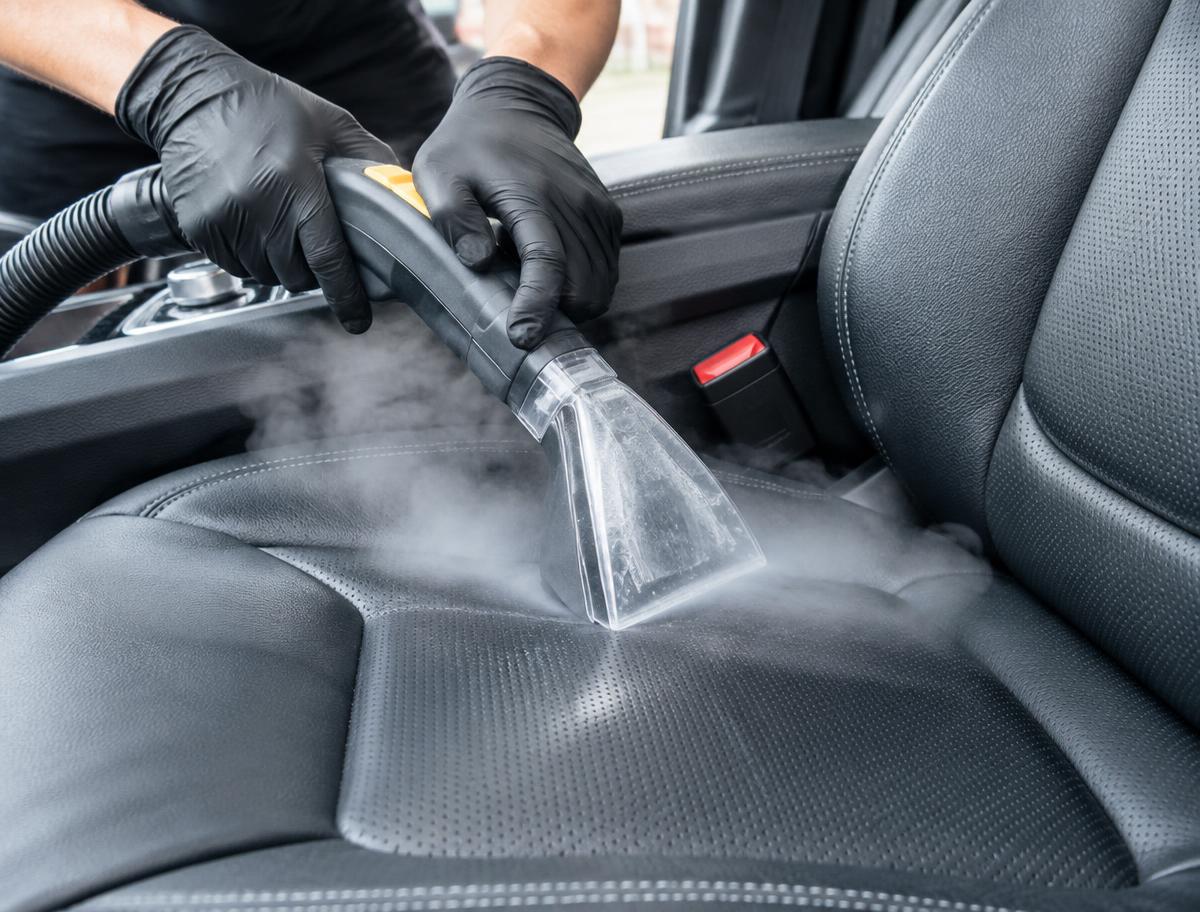
- Avoid steam cleaners held too close or too long
Dealing with stains and smells
For stubborn stains like smoke residue or grease, a light application of an enzyme-based or all-purpose cleaner formulated for fabric can help, but spot test in an inconspicuous area first.
If the headliner smells like smoke or mildew, it often needs an odor-removal treatment in addition to surface cleaning, since smell can be trapped in the foam backing, not just the visible fabric.
What to do if the headliner is already sagging
A sagging headliner usually means the glue has already failed, often from prior water damage, humidity, or age. Cleaning alone won't fix sagging — that requires re-gluing or professional headliner repair/replacement, separate from a standard interior detail.
If you're planning a detail on a car with a sagging headliner, mention it upfront so the detailer can avoid additional moisture that would worsen the problem.
When to call a professional
If the headliner has heavy staining, odor, or any visible sagging, a professional interior detail with experience handling headliners is safer than DIY attempts, since the margin for error with moisture is small.
Professional interior detailing ($129–$229) typically includes careful headliner cleaning as part of a full interior service.
People also ask
Let the pros handle it
Full Car Detailing of Houston offers these services at your home or office across Houston: