What ceramic coating actually does
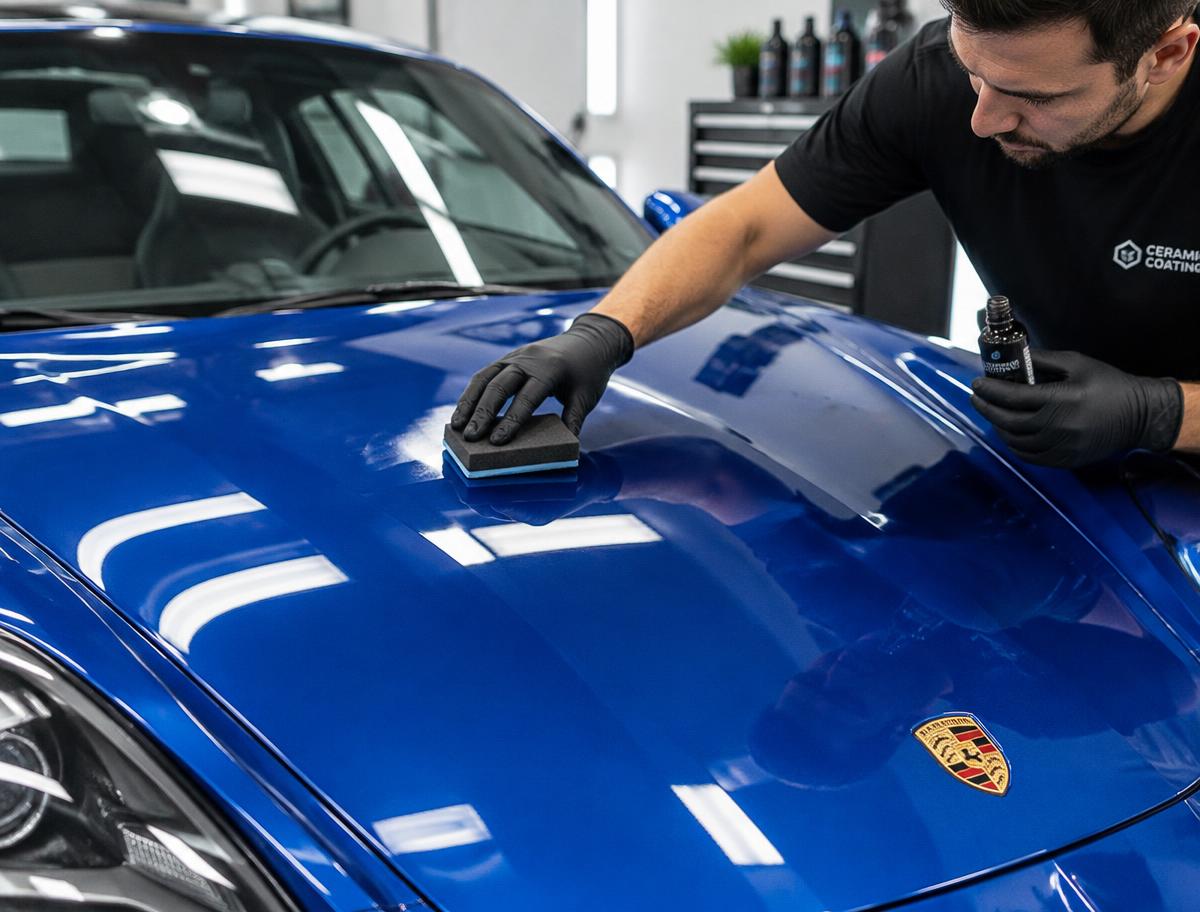
Ceramic coating is a liquid formula, often silicon dioxide (SiO2) based, that chemically bonds to your vehicle's clear coat. It creates a hard, glossy, hydrophobic layer that makes water, bird droppings, tree sap and road grime easier to wash off.
It significantly improves UV resistance and protects against chemical etching and oxidation, but it does not add meaningful thickness to the paint, so it won't stop a rock chip.
What PPF actually does
Paint protection film is a clear urethane film, typically 6-10 mils thick, installed on the vehicle's surface. It acts as a sacrificial layer that physically absorbs impacts from rocks, gravel and road debris, which is especially useful on Houston freeways like I-45 and the Grand Parkway where construction debris and gravel trucks are common.
Quality PPF is also self-healing with light heat, meaning minor swirls and scratches in the film can disappear, while the paint underneath stays untouched.
Key differences at a glance
The core difference is physical protection versus chemical/UV protection.
- Ceramic coating: adds gloss, hydrophobic properties, UV/chemical resistance; does not stop chips
- PPF: physically blocks rock chips and scratches; adds less gloss on its own
- Ceramic coating: $599–$1,499 depending on vehicle and coating tier
- PPF: typically priced per panel or as a full-front/full-vehicle package
- Combining both: PPF on impact zones, ceramic coating as a topcoat over PPF and painted panels
Which matters more for Houston driving
Houston's combination of intense summer UV, Gulf humidity, and heavy freeway traffic on I-10, I-45 and Beltway 8 makes both forms of protection valuable. Ceramic coating helps the most with everyday washing, water spots and sun fade.
PPF matters most if you do a lot of highway driving, especially near construction zones or gravel-hauling trucks, where rock chip risk on the hood, bumper and mirrors is higher.
Maintenance differences
Ceramic-coated paint is easier to wash and resists water spots, but still needs regular gentle washing to perform well over its 2-5 year lifespan.
PPF needs to be kept clean too, and most installers recommend a ceramic coating applied over the film to boost gloss and simplify maintenance.
Cost and long-term value
Ceramic coating at $599–$1,499 is generally the more affordable, broader-coverage option. PPF costs more for full coverage but offers protection no coating can match against physical damage.
For many Houston drivers, a smart middle ground is PPF on the front end plus ceramic coating everywhere, giving both impact protection and easy-clean gloss.
People also ask
Let the pros handle it
Full Car Detailing of Houston offers these services at your home or office across Houston: